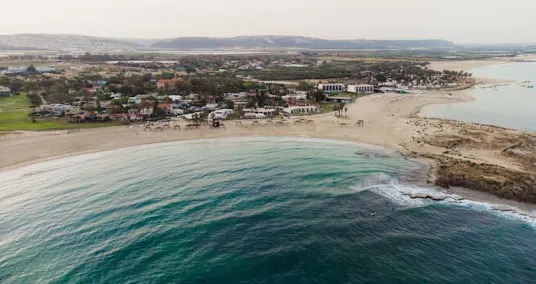
The discovery was made in an ancient shipwreck in the Dor Lagoon near the Carmel Coast, where archaeologists recovered nine pieces of unprocessed iron known as “blooms.”
Researchers from the University of Haifa said Wednesday that an underwater excavation off Israel’s northern Mediterranean coast uncovered what they described as the earliest known cargo of raw iron transported by ship, dating back around 2,600 years, Xinhua reported.
The discovery was made in an ancient shipwreck in the Dor Lagoon near the Carmel Coast, where archaeologists recovered nine pieces of unprocessed iron known as “blooms.” According to the university, the find provides direct evidence of how iron was transported in its earliest commercial stages.
The material was preserved in its original form, having solidified directly in a smelting furnace without undergoing forging or further refinement. Researchers said this distinguishes the cargo from later iron artifacts that typically show signs of shaping or tool-making.
Unlike copper and bronze, which could be melted into liquid form in ancient production processes, iron was heated with charcoal to produce a solid, porous mass. That mass was generally hammered to remove impurities and create denser material suitable for tools and implements.
The recovered blooms showed no indication of that secondary processing stage, suggesting they were transported immediately after production.

Earliest iron shipment discovered in ancient Mediterranean wreck
To determine the age and condition of the cargo, researchers conducted microscopic and chemical analyses.
Radiocarbon dating was also carried out on charred wood embedded in one of the pieces, helping confirm the timeline of the shipment. The findings were published in the journal Heritage Science.
Researchers said the cargo indicates that iron was being moved in raw form from production sites to other locations for further processing, pointing to a level of specialization in ancient manufacturing and trade networks in the Mediterranean.
The University of Haifa said the discovery provides new insight into early iron production and distribution practices in the region.
latest_posts
- 1
 Jamaica reports deadly leptospirosis outbreak after Hurricane Melissa
- 2Toyota Motor Europe to roll out smart EV charging through new partnerships
- 3Discovery of massive spider's web in Greece reveals unexpected behavior
- 4Dark matter obeys gravity after all — could that rule out a 5th fundamental force in the universe?
- 5Hitting the brakes: Hubble Space Telescope watches doomed comet reverse its spin



- 'Sex and the City' star Kim Cattrall marries longtime partner Russell Thomas in intimate London wedding
- How to watch NASA's Artemis 2 astronauts launch to the moon on April 1
- Top 10 Arising Advances That Will Shape What's in store
- Beddings of 2024: Track down Your Ideal Fit for a Tranquil Rest
- Spanish police and soldiers track boars, reinforce farm security amid swine fever outbreak
- Striking American and European television Projects: A Survey
- Colleges say foreign students feel 'unwelcome' in the U.S. amid big drop in international enrollment, new survey finds
- Big Bear glows with big stars | Space photo of the day for Dec. 31, 2025
- IDF struck Iran's largest petrochemical plant, second facility hit in two days, Katz confirms